Embark on a 20‑Day Himalayan Retreat — A Life‑Changing Journey Into Tibetan Healing

An Expert Monograph on Ku Nye: Tibetan Herbal Oil Massage Therapy
Tibetan Herbal Oil Massage, known as Ku Nye, is an ancient and profound manual therapy rooted in Traditional Tibetan Medicine (Sowa Rigpa), one of the world's oldest holistic healing systems. Defined literally as "applying massage with oil" (Ku meaning oil application and Nye meaning massage/pressure) , Ku Nye is codified within the classical Tibetan medical texts, the Gyud-Zhi. Its primary therapeutic aim is the restoration of equilibrium, specifically targeting the stabilization of the volatile rLung (Wind) energy, which governs movement, the nervous system, and psycho-emotional balance. This precise, three-stage ritual (Ku, Nye, and ChiPa—cleansing) utilizes customized, warming herbal oils to ground the body and mind, offering significant clinical benefits for conditions ranging from anxiety and insomnia to chronic pain and neurological disorders.
Lobsang
11/11/202512 min read
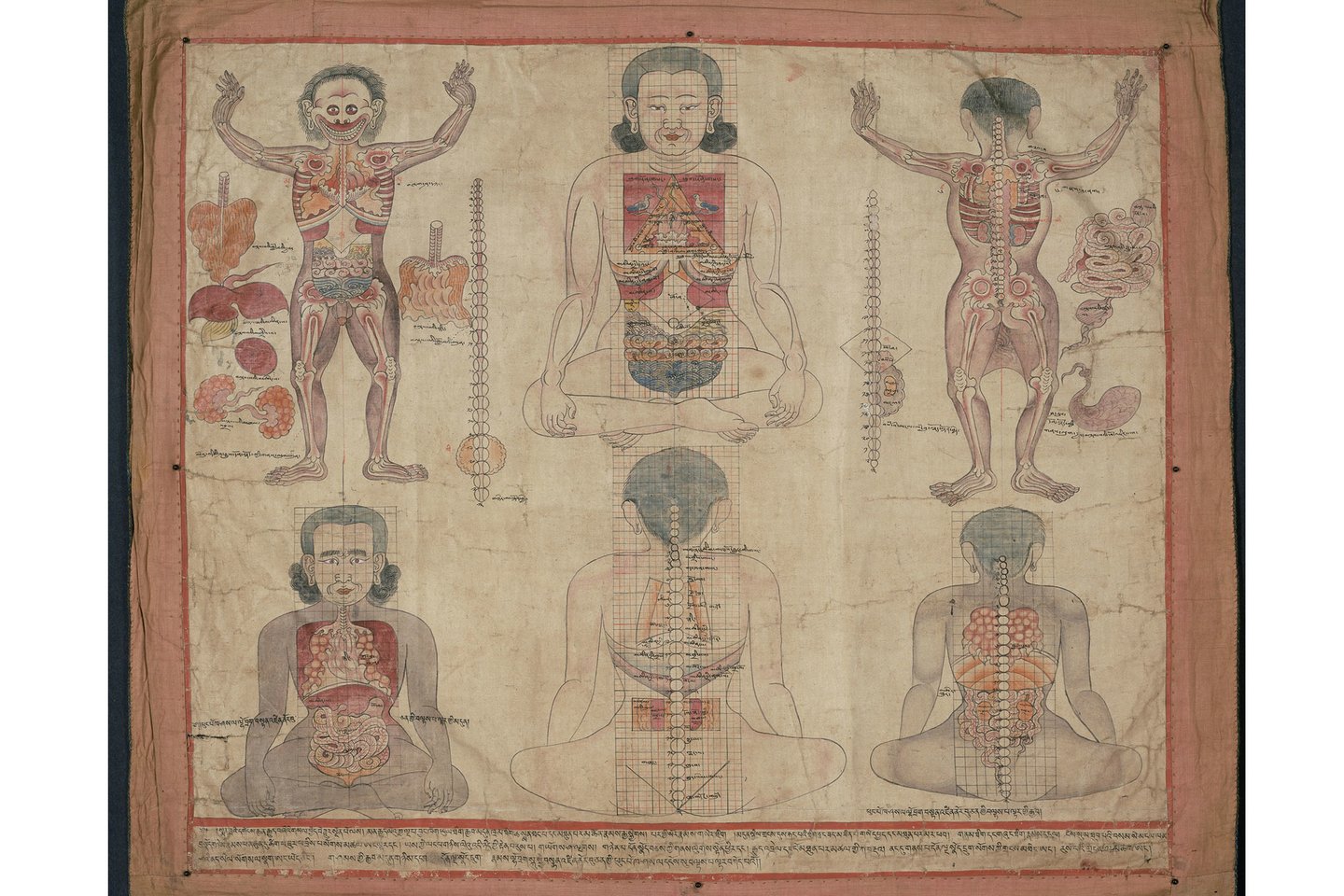
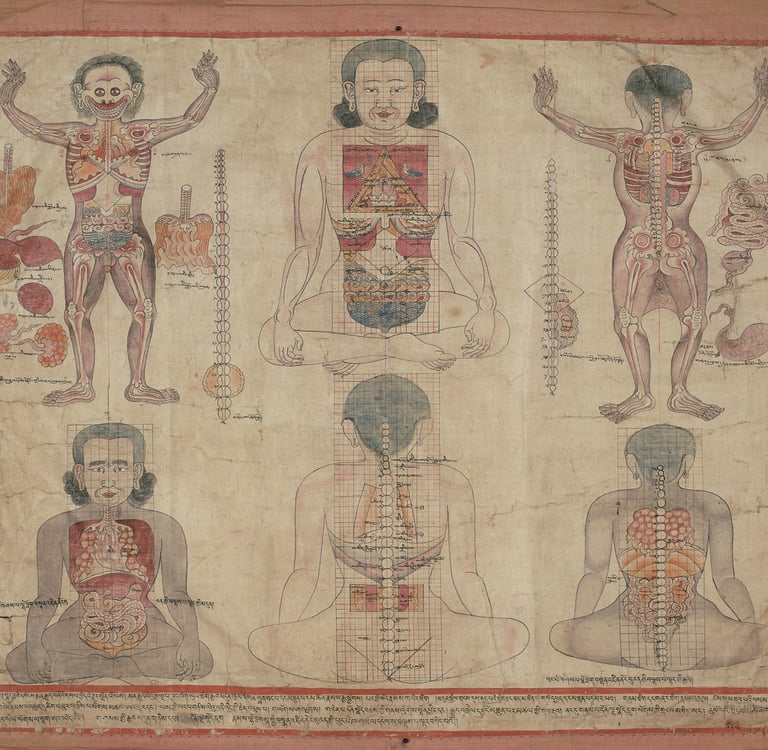
An Expert Monograph on Ku Nye: Tibetan Herbal Oil Massage
Therapy I. Introduction: Ku Nye within the Sowa Rigpa Framework
1.1 Defining Ku Nye: Etymology and Historical Context
Tibetan Herbal Oil Massage, formally known as Ku Nye, is an ancient and dynamic healing art central to Traditional Tibetan Medicine (TTM), or Sowa Rigpa (the Science of Healing).1 TTM is recognized as one of the oldest extant healing traditions, a truly holistic system that addresses health across the physical, energetic, and mental levels.
The terminology of the practice is derived directly from the Tibetan language. Ku (བསྐུ།) signifies the application of oil or unction, while Nye (མཉེ།) denotes the action of performing massage or applying pressure with a variety of movements.1 Therefore, Ku Nye is fundamentally defined as "applying massage with oil".1 This external therapy is highly formalized, codified within the classical texts of Tibetan Medicine, specifically the Gyud-Zhi (Four Medical Tantras).3 Its traditional authority is evidenced by its inclusion in the Final Tantra, where it is outlined under the section dealing with Accessory Therapies, referred to specifically as "Wind: Massage with Sesame oil".5 This foundational textual reference establishes its antiquity and its primary therapeutic indication: the balancing of the vital Wind energy, or rLung.
1.2 The Foundational Pillars of Sowa Rigpa
Sowa Rigpa approaches health management through a comprehensive, four-fold treatment regimen: diet, lifestyle adjustments, internal medicines (herbal compounds), and external therapies.3 The system is built upon the philosophical concept of Tendrel, or interdependence, recognizing that all things, including the individual body, exist in dependence on one another and the external environment.2 The primary objective of Sowa Rigpa is to achieve and maintain the dynamic equilibrium of the five elements—Earth, Water, Fire, Air, and Space.2
Ku Nye is regarded as one of the most important external therapies within this framework.6 Its role as a manual therapy, often used in conjunction with other modalities such as moxibustion and acupuncture, is critical to restoring elemental and energetic balance.3 The context of Ku Nye as a classical medical intervention, rather than merely a general relaxation technique, is validated by its explicit link to the Four Tantras. Its customized application, driven by the patient's unique constitutional profile, transforms it into a precision medical therapy aimed at systematic rebalancing.
II. Philosophical Foundations: The Three Nyepas and Therapeutic Imbalance
2.1 The Three Vital Energies (Nyepa Sum)
The five elements coalesce to form the three vital energies, or humors, known as the Nyepa Sum.7 These energies—rLung (Wind/Air), Tripa (Fire/Bile), and Beken (Water/Earth/Phlegm)—govern the physical body, energy, and mind.2 The goal of TTM is always to maintain the proportional balance of these three principles.
Significantly, TTM links imbalances in the Nyepas to the Buddhist concept of the Three Mind Poisons: rLung is associated with greed and avarice; Tripa with hatred; and Beken with ignorance or delusion.10 This philosophical underpinning means that any physical treatment addressing a humoral imbalance, particularly one related to rLung, also serves as a central somatic intervention addressing underlying psychological imbalance.
External factors, such as geography and climate, profoundly influence the Nyepas. For example, cold and windy environments exacerbate rLung.9 Therefore, an effective therapy must employ qualities opposite to the prevailing imbalance to restore equilibrium.
2.2 Ku Nye’s Role in Balancing rLung (Wind)
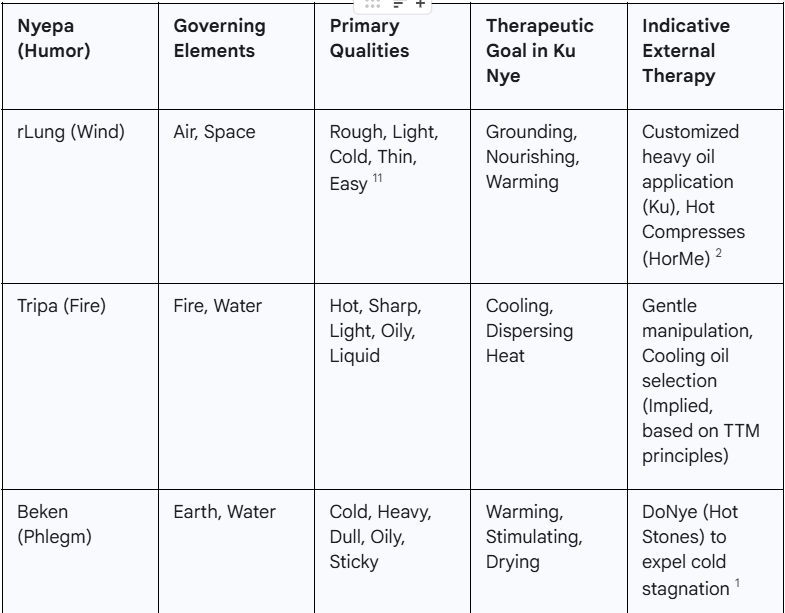
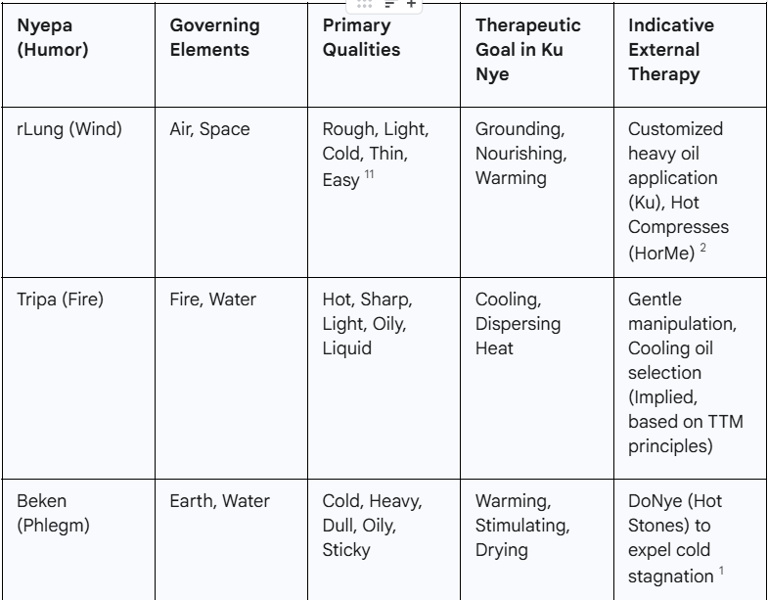
Ku Nye's primary focus is the stabilization of rLung, the most volatile of the vital energies.6 rLung is responsible for movement, circulation, respiration, and the function of the subtle channels, placing it closest to consciousness and the nervous system.11 When rLung is disturbed, it exhibits qualities that are rough, light, cold, thin, and easy (volatile).
The therapeutic strategy of Ku Nye is designed to apply the opposite qualities—warmth, heaviness, and smoothness—to neutralize this prevailing coldness and volatility.11 The recurrent selection of heavy oils, warming herbal preparations, and specific thermal adjuncts (discussed later) in rLung treatments is directly explained by this theory. The physical intervention of stabilizing rLung through grounding, warming external therapies is viewed in TTM as the mechanism for regulating the patient's nervous system and addressing psycho-emotional volatility.
Table 1 summarizes the therapeutic logic of Ku Nye within the Nyepa Sum framework. The Three Nyepas (Vital Humors) and Ku Nye's Therapeutic Response.
III. The Mechanics of Therapy: The Three Stages of Ku Nye
A Ku Nye session is a structured, three-step clinical process: Ku (oil application), Nye (massage/pressure), and ChiPa (cleansing).4 This sequence transforms the treatment from simple relaxation into a deep, therapeutic ritual designed for systemic rebalancing.
3.1 Stage 1: Ku (Oil Application)
The initial stage, Ku, involves applying a generous amount of warm, medicinal oil across the patient’s body, typically from head to toe.13 The purpose of this stage is dual: physical conditioning and pharmacological preparation. The oil moisturizes the skin and initiates the process of calming the nervous system.8 Traditional choices for carrier oils are often heavy in nature, designed to counteract the inherent lightness and volatility of rLung.13 These may include sesame oil, olive oil, or, traditionally in Tibet, clarified dri (female yak) butter, which is valued for its powerful therapeutic use.
The oil is more than a lubricant; it serves as the therapeutic vehicle. The heavy, warm, customized oils selected based on the patient's Nyepa profile must saturate the channels and penetrate the tissues before the mechanical work begins. This saturation allows the medicinal properties to drive deep into the body, grounding the volatile rLung energy both physically and biochemically.
3.2 Stage 2: Nye (Massage and Pressure)
The second stage, Nye, focuses on mechanical manipulation. This includes gentle massage strokes that build gradually into deeper work, incorporating joint manipulation and stretches.15 The practitioner concentrates pressure on specific acupressure points, meridians, and rLung points that correspond to the underlying constitutional imbalance or illness.
The techniques utilized show similarities to modern remedial massage, reflexology, and acupressure.6 Physiologically, the manipulation stimulates blood flow, helps loosen stiff joints, and promotes general relaxation and better sleep.15 By directing therapeutic force into the channels already softened and saturated by the customized herbal oil, the Nye stage facilitates the free flow of energy and actively regulates the three bodily humors.
3.3 Stage 3: ChiPa (Cleansing)
The concluding step is ChiPa, a signature cleansing technique that distinguishes Ku Nye from many Western oil-based massage modalities.4 ChiPa utilizes different natural powders, often a dry herbal powder scrub, applied to the body to absorb the residual oil from the skin.
This step is crucial for detoxification and maintaining energetic balance. While the Ku stage is about saturation and infusion, the ChiPa stage is about expulsion and purification. It removes the excess heavy oil and, symbolically, draws out impurities and released toxins from the skin surface.2 This ensures the patient is left feeling fresh and light, not congested by residual cold or heavy oil, thereby solidifying the balanced state achieved during the Nye stage.
IV. The Pharmacopoeia of Unction: Customization with Therapeutic Oils
The precise selection and preparation of herbal oils (Duknum in Tibetan) are hallmarks of the Ku Nye system, moving the therapy far beyond simple mechanical manipulation. The fundamental principle governing oil selection is the application of qualities opposite to the patient's condition.11 Since TTM utilizes high-altitude herbs grown in Himalayan regions 2, the preparations are potent and specific.
While general carrier oils like sesame oil or clarified butter provide the necessary warmth and heaviness to counteract volatile rLung 4, specialized blends are utilized for targeted psycho-physical effects. This therapeutic specificity confirms that Ku Nye relies on precision pharmacognosy, not mere aromatherapy.
Certain customized oils have documented uses:
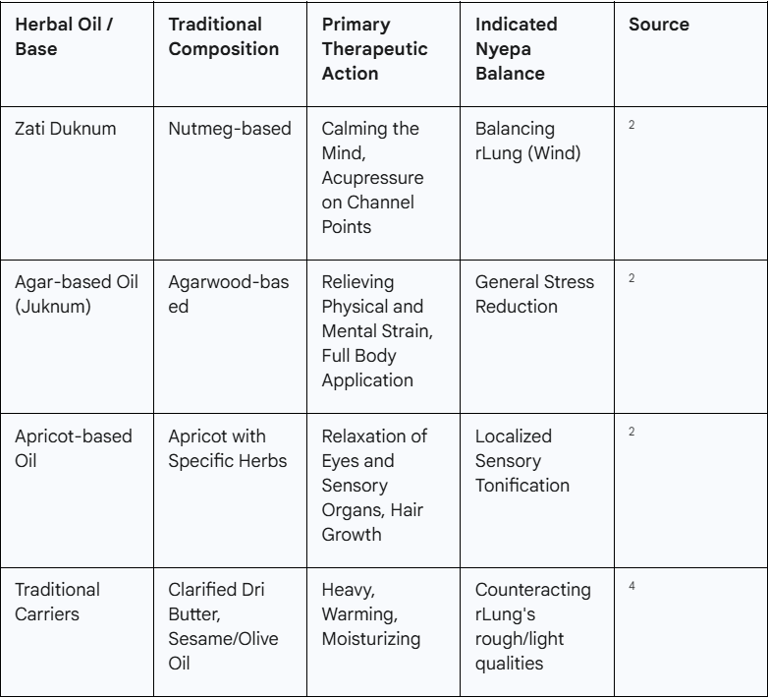
Zati Duknum (Nutmeg-based Oil): This preparation is specifically used for acupressure on channel points and is highly valued for its ability to calm the mind.2 Given that rLung disorders manifest acutely as anxiety and agitation, the warming and known sedative properties of nutmeg make this ideal for stabilizing the nervous system.
Agar-based Oil (Juknum Agar Dether): Used for full-body application, this oil focuses on relieving profound physical and mental strain, promoting a feeling of freshness and lightness.2 Agarwood derivatives are traditionally utilized in TTM to clear subtle channel stagnation, supporting the mental and physical relief.
Apricot-based Oil with Herbs: Applied locally to the head and hair, this oil is used for better hair growth and relaxation of the sensory organs, particularly the eyes.
Furthermore, external therapies are frequently supported by internal regimens. For instance, Triphala, a compound composed of three Indian superfruits (Haritaki, Amalaki, and Bibhitak), is commonly used in TTM to prepare herbal oils and medicinal powders.2 Its systemic benefits, which include aiding digestion, nutrient assimilation, and supporting the immune system, underscore the TTM understanding that optimal external treatment requires simultaneous internal constitutional support.2
Table 2 details the therapeutic specificity of the herbal oil preparations. Specialized Herbal Oils and Therapeutic Action in Ku Nye.
V. Clinical Applications and Indications: Balancing the Vital Energies
Ku Nye is an effective, dynamic treatment that targets conditions stemming from imbalances in the Nyepa Sum, with a particular specialization in volatile rLung disorders. Its efficacy is recognized both as a preventative measure and a therapeutic modality.
5.1 Primary Indications: Management of rLung Disorders
Ku Nye is considered especially useful in the prevention and treatment of rLung (wind energy) disorders.12 These disorders manifest across neurological, somatic, and psychological domains.
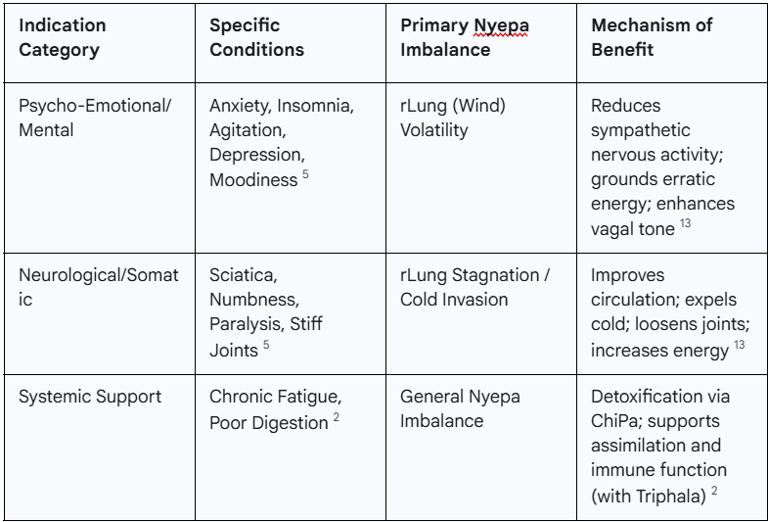
Neurological and Somatic Manifestations: Imbalances in rLung often present as disorders of movement and sensation. Ku Nye is explicitly indicated for neurological problems such as sciatica, numbness, paralysis, and stiff joints.5 By stimulating blood flow and loosening stiffness, the massage directly addresses the physical stagnation caused by disordered wind energy.
Psycho-Emotional and Mental Imbalances: Given rLung's connection to consciousness and the nervous system, the therapy is highly effective for psycho-emotional conditions including agitation, anxiety, depression, moodiness, forgetfulness, lack of concentration, and insomnia.
The therapeutic mechanism for these emotional benefits correlates strongly with contemporary physiological understanding. Ku Nye is recognized as a natural stress buster because it reduces sympathetic nervous activity, which is a major contributor to feelings of stress and unease.13 General massage therapy research supports this by demonstrating that pressure stimulation enhances vagal activity and reduces cortisol levels.16 Therefore, the ancient TTM goal of stabilizing volatile rLung serves as the traditional interpretation of regulating the Autonomic Nervous System (ANS), providing a powerful, physical pathway for profound psycho-emotional relief.
5.2 Secondary Benefits and Systemic Support
Beyond specific rLung treatment, Ku Nye offers broad systemic support. It improves chronic fatigue and raises energy levels by counteracting poor circulation and muscle tension.13 It promotes deep sleep and aids in improving digestion and nutrient assimilation.2 Furthermore, TTM historically attributes benefits related to longevity to Ku Nye, believing it supports the function of internal organs and aids in clearing and sharpening the sensory organs.5
Table 3 summarizes the primary indications and the mechanism by which Ku Nye achieves its therapeutic effects. Primary Ku Nye Indications and Mechanisms
VI. Advanced External Modalities Integrated with Ku Nye
For conditions requiring deeper therapeutic intervention, often related to stubborn chronic pain or cold stagnation, Ku Nye can be integrated with or extended by other specialized traditional modalities.14 This inclusion demonstrates a therapeutic hierarchy in TTM, where progressively intense thermal and mechanical applications are utilized for more severe or chronic pathologies.
6.1 HorMe: Mongolian Hot Oil Compress
HorMe is a traditional therapy developed in Mongolia that utilizes herbal boluses (sachets) filled with warming substances such as clove, cardamom, saffron, bamboo, and nutmeg, all steeped in a custom oil blend.14 These heated boluses are applied to specific energy points across the body. HorMe is highly effective for stress relief, nourishing the body, and providing rejuvenation, particularly useful in warming and soothing cold rLung and Beken manifestations.
6.2 DoNye: Tibetan Stone Massage
DoNye is a deep massage technique that integrates Tibetan herbal oils with the application of smooth, heated stones placed on specific energy points.14 The use of hot stones is a classical TTM intervention indicated for immediately reducing stubborn, chronic orthopedic pain, expelling cold stagnation, relieving stiffness, and promoting circulation.1 The heat provides a deep sensation of calm and healing.
The combination of medicinal oils with heat is synergistically potent. Heat opens the subtle channels, allowing the pharmacologically active compounds in the customized herbal oils to penetrate deeper into the musculature and subtle energy points, thereby maximizing the effect against cold, stiff rLung.1 Due to the intense thermal application, practitioners must adhere to strict safety protocols, maintaining stone temperatures between 120 and 130 degrees Fahrenheit, and using protective linen between the stone and the skin to prevent thermal injury, especially when treating high-risk patients like those with diabetes or poor circulation.
6.3 YukChö and MeBum Therapies
Two additional modalities that may complement Ku Nye include YukChö (Tibetan Stick Therapy) and MeBum (Cupping Therapy).14 YukChö is a method involving gentle tapping that creates deep-resonating pulsations, helping to increase circulation and counter various imbalances.14 MeBum, or cupping, is a more powerful therapy often used to draw out pathogens or clear deep local stagnation.
VII. Contraindications, Preparation, and Practitioner Guidance
7.1 Preparation and Aftercare Protocol
Proper preparation maximizes the therapeutic benefit of Ku Nye. Traditional saunas, including Far Infrared Saunas, are recommended prior to treatment to relax muscles, reduce physical and mental stress, flush toxins, and aid in preparing the body for deeper manipulation.
Post-massage care is equally vital for sustaining the equilibrium achieved. The essential final step is the application of ChiPa powder for cleansing.4 The practitioner also provides consultation on diet, herbs, and lifestyle adjustments based on the individual's constitutional profile and the four seasons.5 This consultation is the critical bridge that translates the temporary rebalancing of the physical session into sustained, long-term health maintenance, aligning with Sowa Rigpa’s goal of preventing illness.
7.2 Absolute and Relative Contraindications
As a medical system, Ku Nye requires specialized training and careful adherence to contraindications, integrating traditional wisdom with modern clinical caution.
Absolute Contraindications: Treatments that involve deep pressure or thermal therapy must be avoided in cases of acute fever, active sites of cancer, recent lacerations, or dermatological disorders.
Relative Contraindications Requiring Adjustment:
Pregnancy: While massage can be beneficial, the therapist must be trained in prenatal massage, avoiding specific techniques and positions, especially during the first trimester.
Cardiovascular Conditions: For patients with unstable high or low blood pressure or serious heart conditions, the therapist must adjust the duration and intensity of the session, often avoiding heavy, deep tissue work.
Vascular and Structural Issues: Direct, deep pressure must be avoided over fragile structures such as varicose veins or hernias.
Sensory Impairment: Patients with diabetes may experience reduced sensation (neuropathy) in the extremities.18 When advanced modalities like DoNye (hot stones) are employed, extreme caution is mandatory. A patient with reduced sensation may be unable to detect overheating, placing them at high risk for thermal injury.17 This necessity demands that practitioners possess a detailed understanding of the patient's comprehensive medical history.
VIII. Conclusion and Synthesis: The Holistic Impact of Ku Nye
Tibetan Herbal Oil Massage (Ku Nye) is a profound expression of Sowa Rigpa philosophy, demonstrating an intricate understanding of the interdependence of mind, energy, and body. It is a precise, individualized system of medicine defined by its sequential methodology (Ku-Nye-ChiPa) and its pharmacological reliance on customized, temperature-adjusted herbal oils.
The core of Ku Nye therapy lies in its ability to manage the turbulent rLung energy, which governs movement and the nervous system. By systematically applying grounding (heavy) and warming (thermal) modalities in opposition to the cold, light qualities of disturbed rLung, the therapy effectively addresses a range of conditions, from chronic orthopedic pain and stiffness to debilitating psycho-emotional imbalances like anxiety, agitation, and insomnia. The clinical success observed in treating these neurological and psychological disorders confirms that the ancient concept of stabilizing volatile rLung serves as a powerful somatic means of regulating the body’s modern Autonomic Nervous System.
As an external therapy supported by a robust internal philosophy, Ku Nye stands not only as an efficacious treatment for established disease but also as a highly sophisticated modality for constitutional maintenance and preventative health, ensuring dynamic equilibrium remains the standard state of being.
Works cited
What Makes Tibetan Kunye Massage Therapy Unique? | Sowa ..., accessed November 12, 2025, https://sowawellness.com/2017/01/11/tibetan-kunye-massage-therapy/
A Guide To Traditional Tibetan Medicine | Healing Holidays, accessed November 12, 2025, https://www.healingholidays.com/blog/a-guide-to-traditional-tibetan-medicine
About Sowa Rigpa, accessed November 12, 2025, https://www.sowarigpainstitute.org/sowa-rigpa
Ku-ney Therapy - Kunde Institute, accessed November 12, 2025, https://www.kundewellness.org/ku-ney-therapy.html
Tibetan remedial massage called "Kun Nye," - Tibet House US | NYC - Official Website, accessed November 12, 2025, https://thus.org/tibetan-remedial-massage-called-kun-nye/
What are the Origins and Benefits of Traditional Tibetan Massage? | SoulAdvisor, accessed November 12, 2025, https://www.souladvisor.com/therapy/traditional-tibetan-massage
Tibetan Medicine — Sowa Rigpa, accessed November 12, 2025, https://www.sowarigpaschool.com/tibetan-medicine-1
Ku Nye - Nyima Tibetan Healing Center, accessed November 12, 2025, https://www.nyimatibetanhealingcenter.be/ku_nye/
Tibetan Medicine and Constitutional Doctrine - PADMA CH, accessed November 12, 2025, https://padma.ch/en/tibetane-teaching/
TIBETAN MEDICINE, ITS HUMOURS AND ELEMENTS, accessed November 12, 2025, https://www.repository.cam.ac.uk/bitstreams/48dc642a-6daa-49dc-8c23-e45af7303373/download
International Academy of Traditional Tibetan Medicine - sorig.info, accessed November 12, 2025, https://sorig.info/images/diplomas/galyan-diploma.pdf
External Therapies - རྒྱལ་སྤྱིའི་བོད་ཀྱི་གསོ་རིག་ཁང་།, accessed November 12, 2025, https://www.sorig.net/about/what-is-sowa-rigpa/external-therapies
Ku Nye: Why You Should Give this Therapeutic Massage a Try - Farnatchi Spa, accessed November 12, 2025, http://farnatchispa.com/ku-nye-why-you-should-give-this-therapeutic-massage-a-try/
Wellness Offerings - Menla, accessed November 12, 2025, https://menla.org/wp-content/uploads/2018/02/Dewa_Spa_Menu_Sept_2107.pdf
KU NYE -TIBETAN MASSAGE- | Marga-Yoga-Retreats, accessed November 12, 2025, https://www.marga-yoga-retreats.com/ku-nye
Massage therapy research review - PubMed - NIH, accessed November 12, 2025, https://pubmed.ncbi.nlm.nih.gov/27502797/
Safe Techniques for Incorporating Hot Stones into Your Massage Practice, accessed November 12, 2025, https://rathadaireangling.ie/forums/topic/safe-techniques-for-incorporating-hot-stones-into-your-massage-practice/
Massage Contraindications: What You Need to Know, accessed November 12, 2025, https://shiatsumassagecenter.com/massage-contraindications/
Pregnancy Massage: Pressure Points to Avoid & Safe Techniques, accessed November 12, 2025, https://www.pressmodernmassage.com/blogs/going-deep/pressure-points-to-avoid-in-pregnancy
Home | Services | Retreat | Yoga & Calm | About Us | Contact
Terms and Conditions | Privacy Policy | Refund Policy